How Machine Tending Is Transforming Robotic Automation Solutions for Manufacturing
Walk through almost any busy shop floor and the bottlenecks reveal themselves quickly. A machining center sits idle for three minutes waiting for an operator to unload finished parts and stage fresh blanks. A welder loses time repositioning heavy fixtures between jobs. A skilled machinist spends too much of the shift opening doors, pressing cycle start, and carrying parts instead of solving process problems. None of that is dramatic, but it adds up fast. Across a week, then a quarter, then a fiscal year, those small pauses become expensive.
That is why machine tending has become one of the most practical entry points into robotic automation. Not the flashiest, not always the most technically exotic, but often the one with the clearest path to measurable results. For manufacturers trying to increase spindle utilization, reduce labor pressure, improve consistency, and make room for growth without expanding headcount at the same rate, machine tending addresses a very real operational pain.
The reason it matters now is simple. Most shops are under pressure from both sides. Customers want shorter lead times and more stable pricing. Labor markets remain tight, especially for second and third shift staffing. At the same time, product mixes are getting more complicated. The old model, where adding output simply meant adding another operator to another machine, breaks down when experienced labor is scarce and margins are thin.
Machine tending changes that equation by putting a robot in charge of the repetitive handling work around a process, loading raw material, unloading finished parts, presenting components for inspection, managing part orientation, and keeping machines running longer with less interruption. It sounds straightforward, and in many cells it is. But the real transformation goes deeper than loading and unloading. Done well, machine tending becomes the backbone for broader robotic automation solutions across machining, welding, inspection, and downstream assembly.
Why machine tending became the first serious automation move for many shops
I have seen manufacturers hesitate for years around automation because they assumed robotics required huge production volumes and long runs of identical parts. That assumption came from older systems that were difficult to change over and expensive to integrate. In some high-volume sectors, that was true. In modern job shops and mid-volume operations, it is far less true than it used to be.
Machine tending works because it attaches directly to a process that already produces value. The machine tool is there. The cycle time is known. The waste is visible. If a CNC lathe runs a six-minute cycle and an operator spends ninety seconds loading, unloading, deburring, and handling paperwork, there is a clear opportunity. Even when the robot does not shorten cut time, it often reduces idle time between cycles and extends the hours when production can continue.
That is where CNC automation has matured. Ten years ago, many machine tending cells were rigid and difficult to justify unless the part family was stable. Today, with better grippers, smarter vision systems, improved fixture design, and more usable HMI programming, shops can switch part numbers faster and support a broader mix. The practical result is that machine tending is no longer reserved for automotive-scale programs. It fits aerospace suppliers, medical device machining, metal fabrication, plastics, and contract manufacturers running medium-size batches.
There is also a less visible benefit that good operations managers recognize right away. Once repetitive loading work is automated, the operator role changes. Instead of hovering at a machine door, that person can oversee multiple assets, verify quality, manage offsets, handle setup, and intervene only when needed. That is a better use of skill, and in many shops it is the only realistic way to grow output without burning out the team.
What actually changes when a robot tends a machine
The obvious change is physical. A robot grips a part, opens the machine door or interfaces with an automatic door, removes the finished part, places a new blank, and starts the next cycle. But those visible motions are only one layer.
Underneath, machine tending creates a new production rhythm. The cell needs part presentation that is repeatable enough for the robot to trust. It needs workholding and pallet design that account for variation in raw stock. It needs machine I/O that reliably communicates cycle complete, chuck status, and fault conditions. It needs process logic that handles rejects, retries, and interruptions without confusion. It often needs infeed and outfeed staging, barcode reads, air blow-off, and some form of quality verification.
In practice, this is why machine tending projects succeed or fail based on details that do not show up well in glossy brochures. The robot itself is usually the easy part. The hard part is everything around it. If parts arrive with inconsistent orientation, if oil buildup affects grip, if chips clog the nest, if part-to-part variability exceeds what the gripper was designed for, uptime will suffer. Good integrators know this. Experienced plant teams know it even more sharply, because they live with those edge cases every day.
One of the biggest shifts comes from standardization. Once a shop installs a successful machine tending cell, it starts to look at adjacent processes differently. Operators begin asking why one lathe has an automatic door and another does not. Maintenance teams start standardizing sensors and pneumatic components across cells. Supervisors ask for common alarm screens and a consistent HMI programming approach so cross-training becomes easier. What begins as one automation project often becomes the seed of a more disciplined operating model.
The connection between machine tending and spindle utilization
Manufacturers sometimes frame automation only in terms of labor replacement, which is too narrow and usually not the strongest economic argument. The better lens is asset utilization. A machining center costs the same whether it spends part of the shift cutting metal or waiting on handling. Every minute the spindle is not engaged for avoidable reasons is lost capacity.
Machine tending improves utilization in several ways. It shortens non-cut time between cycles. It reduces the number of micro-delays caused by operator interruptions. It supports unattended or lightly attended operation during breaks, shift changes, and in some cases lights-out periods. It also stabilizes cycle timing, which makes scheduling more predictable.
A simple example illustrates the point. Suppose a vertical machining center runs a part in eight minutes, with one minute of load and unload time. Across a ten-hour shift, the machine can theoretically complete about sixty-six cycles if everything is perfect. But add operator distractions, material handling walks, quality checks, and the natural stop-start pattern of manual work, and actual throughput drops. If a tending robot cuts effective non-cut time to twenty or thirty seconds and keeps that pace all shift, the gain is not marginal. On a bottleneck machine, it can be the difference between shipping on time and carrying backlog into the weekend.
The same principle extends beyond machining. In robotic welding, for example, tending can mean loading weld fixtures, presenting subcomponents, or transferring completed parts to the next station. A welding robot only adds value when the arc is on. If operators spend too much time handling hot parts, changing fixtures, or repositioning assemblies, the economics weaken. Thoughtful machine tending around robotic welding often delivers the hidden productivity improvement that makes the entire cell perform.
End of arm tooling is where theory meets reality
If you ask experienced integrators where many machine tending projects are won or lost, a lot of them will point to end of arm tooling. The gripper has to do more than pick up a part. It has to tolerate variation, survive coolant and chips, maintain https://josueicyr336.readspirex.com/posts/end-of-arm-tooling-selection-guide-for-robotic-manufacturing-cells force without crushing sensitive features, release cleanly, and sometimes handle multiple part states in the same cycle.
That sounds obvious until a project enters production. A gripper that performed perfectly in runoff with clean sample parts may struggle once raw material shows normal mill variation or a chuck leaves light residue on the OD. A part may come out of a machine slightly warmer than expected. A forged blank may not sit flat in the infeed tray. A thin-wall component may flex under vacuum and throw off placement.
The best end of arm tooling designs account for all of that. They often include compliance, part presence sensing, and wear-resistant contact surfaces. In some cases, dual grippers make sense, especially when cycle time is tight and the robot needs to unload and reload in one pass. In other cases, modular fingers are more valuable because the shop changes over often. There is no universal answer. The right design depends on part geometry, contamination, machine layout, and how much variation the upstream process introduces.
I have seen shops spend heavily on a capable robot and then try to save money on the gripper, only to spend months chasing missed picks and dropped parts. That is usually a false economy. If the end of arm tooling is wrong, everything downstream becomes a workaround.
HMI programming matters more than most people expect
A robotic cell is not truly successful just because it runs well during acceptance. It has to be usable by the people who inherit it on first shift, second shift, weekends, and after the original project team moves on. That is where HMI programming becomes critical.
Good HMI design translates complex automation into clear operational choices. Operators should be able to select a recipe, recover from routine interruptions, understand alarms, and verify status without calling an engineer every time something goes wrong. Setup technicians should have access to the information they need without digging through obscure menus. Maintenance staff should be able to diagnose whether a fault comes from the machine tool, robot, gripper, safety circuit, or part presentation system.
Poor HMI programming creates a subtle but expensive kind of friction. The cell may technically work, but nobody trusts it. Operators bypass features because they are confusing. Changeovers take too long because recipe management is inconsistent. Small faults lead to long downtime because the alarm text does not clearly identify the cause. In one plant, I watched a well-built tending cell sit idle after a simple sensor issue because the fault screen was so generic that the team assumed a robot problem and waited for specialist support. The physical fix took five minutes. The lost production took most of a shift.
A useful HMI does not need to be flashy. It needs to reflect how production people think under pressure. Clear mode selection, intuitive manual jog screens, visual part count tracking, practical maintenance prompts, and sensible alarm hierarchy matter far more than decorative graphics. When HMI programming is done by someone who understands shop floor behavior, adoption is faster and uptime tends to follow.
The labor question, and why the answer is more nuanced than many headlines suggest
Machine tending often gets discussed as though its sole purpose is to replace operators. That is too simplistic, and it misses what is happening in most real factories. More often, tending robots absorb repetitive handling work so existing employees can cover more value-added responsibilities.
In a shop with persistent hiring challenges, the robot may make it possible to keep two machines running with one operator rather than one. In another, it may support lights-out production for a stable part family, allowing day-shift staff to focus on setups and process improvement. In a high-mix facility, it may free skilled machinists from repetitive loading so they can spend time on first-article work, offset management, and troubleshooting.
That distinction matters because successful automation adoption often depends on how leadership frames it. If employees see a machine tending project as a blunt labor elimination move, resistance rises. If they see it solving the tasks nobody can reliably staff, especially late shifts and physically taxing part handling, support tends to improve. The strongest implementations are usually the ones where operators help shape details like tray design, access points, maintenance clearances, and recovery procedures. People trust systems they had a hand in making practical.
Where machine tending creates the fastest returns
Not every machine is a good candidate. Some parts are too delicate, some cycles too short, some layouts too constrained, some changeovers too frequent. But when the fit is right, payback can be compelling.

The best candidates tend to share a few characteristics:
- predictable machine cycles with meaningful idle time between parts
- parts that can be presented consistently and gripped reliably
- enough volume or repeatability to justify fixture and programming effort
- labor pain, especially on off shifts or in physically repetitive handling
- a process where improved consistency has real value, not just speed
Even then, the business case should be honest. Some cells justify themselves through labor redeployment. Others through added machine hours. Others through better quality, reduced scrap, or safer handling of hot, sharp, or heavy parts. Many successful projects combine several of those factors rather than relying on one.
A common mistake is forcing an ROI model that assumes perfect lights-out operation from day one. Most plants are better served by a phased expectation. First, stabilize the cell on attended shifts. Next, extend operating windows during breaks or lower-staffed periods. Then build toward unattended running where the process allows it. That path is slower on paper, but it is far more defensible in practice.
The relationship with robotic welding and other automation cells
Machine tending does not live in isolation. Once a manufacturer has built confidence in robot-based handling, adjacent processes become easier to automate because the organization has already learned some of the hardest lessons. Safety review gets more efficient. Maintenance teams understand spare parts strategy. Operators are more comfortable with interlocks and fault recovery. Engineers gain a better feel for cycle balancing and material flow.
That is why machine tending often pairs naturally with robotic welding. A fabrication plant that automates weld deposition may soon realize that upstream loading and downstream transfer are now the pacing elements. If a welder can complete a repeatable program quickly but operators still spend too long staging subassemblies, the full value never appears. Introducing robotic handling around the weld cell can smooth flow, reduce ergonomic strain, and improve consistency in fixturing.
The same pattern shows up in inspection and assembly. A shop might begin with CNC automation, then add automated gauging, then integrate marking or packaging. The robot becomes less of a stand-alone asset and more of a bridge between process steps. That is when automation starts changing plant behavior at a broader level.
What separates a robust cell from an expensive science project
The strongest machine tending systems are not always the most complex. In fact, many of the most reliable ones are deliberately restrained. They solve the real problem and avoid unnecessary features that look impressive at launch but create maintenance burden later.
When evaluating a project, I usually want straight answers to a handful of practical questions:
- What happens when the incoming part is slightly out of position?
- How long does a normal changeover take with actual shop personnel?
- Can the cell recover gracefully after a machine fault or power interruption?
- Are wear items, sensors, and gripper components easy to replace?
- Does the team on second shift understand the alarm messages without outside help?
If those answers are weak, the projected throughput numbers do not mean much. Reliability under normal plant conditions matters more than performance during a controlled demo. Dust, coolant mist, chip accumulation, upstream variability, and rushed shift handoffs are the real environment. Cells that account for that reality earn trust. Cells that ignore it become what every plant dreads, a piece of equipment everyone works around.
Changeover is the quiet battleground
A lot of manufacturers discover that the technical hurdle is not making a machine tending cell run one part well. It is making it run the third and fourth part family without turning every switch into an engineering event.
This is where modular fixturing, recipe discipline, and HMI programming all intersect. If finger swaps require fine shimming, if tray locations are not repeatable, if machine offsets and robot positions are managed separately without clear linkage, flexibility evaporates. The cell may still have value, but its range narrows, and operators avoid using it for shorter jobs.
Well-designed changeover is rarely glamorous. It depends on hard mechanical datums, unambiguous setup prompts, and recipe structures that prevent accidental mismatch. Vision can help in some applications, but it should not become a substitute for good mechanical repeatability when simple locating would do the job. The goal is confidence. Production should know that when they switch part numbers, the cell returns to a known state without a long debugging session.
Safety, ergonomics, and the less visible win
Productivity gets the attention, but safety is often one of the strongest justifications for machine tending. Repetitive loading of heavy castings, sharp blanks, or hot welded parts wears people down. Even when no single lift exceeds a limit, thousands of repetitive motions across months create fatigue and risk.
Robots are well suited to the dull, repetitive, and awkward work that people tolerate because the process demands it. Removing that burden can reduce strain injuries, improve morale, and make it easier to retain experienced workers who are more valuable solving problems than carrying parts. In older facilities, I have seen machine tending succeed less because it unlocked some dramatic throughput gain and more because it stabilized a job nobody wanted to do manually anymore.
That kind of benefit does not always fit neatly in a spreadsheet. It still matters.
What manufacturers should expect over the next few years
Machine tending will keep moving toward greater flexibility, but the most important changes are likely to be practical rather than theatrical. Better software tools will continue to simplify deployment. More machine tools will ship ready for automation interfaces. Gripper ecosystems will get more modular. HMI programming standards will improve as plants demand systems that are easier to own, not just easier to sell.
At the same time, expectations should stay grounded. No robot fixes an unstable process. If a machine tool has poor repeatability, raw stock varies wildly, or chip control is inconsistent, automation will expose those weaknesses quickly. That is not a reason to avoid machine tending. It is a reason to approach it with discipline.
The manufacturers getting the most from robotic automation solutions are not chasing novelty. They are identifying repetitive friction around valuable processes and removing it with systems that fit their actual operating conditions. Often, that starts with one machine door, one gripper, one set of trays, and one cell that simply runs reliably enough to earn the plant’s trust.
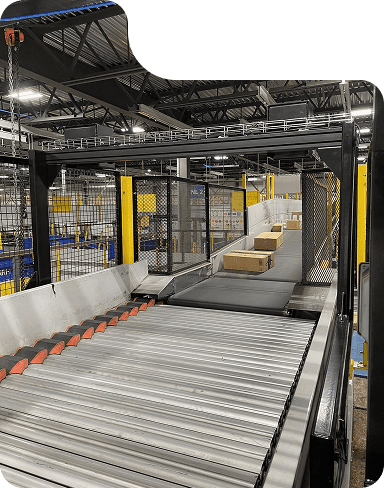
Once that happens, the conversation changes. Automation stops being a future initiative and becomes part of how the factory works. And that is when machine tending delivers its full impact, not as an isolated robot, but as a practical, proven lever for capacity, consistency, and growth.
Sync Robotics Inc. — Business Info (NAP)
Name: Sync Robotics Inc.Address: 2-683 Dease Rd, Kelowna, BC V1X 4A4
Phone: +1-250-753-7161
Website: https://www.syncrobotics.ca/
Email: [email protected]
Sales Email: [email protected]
Hours:
Monday: 8:00 AM – 4:30 PM
Tuesday: 8:00 AM – 4:30 PM
Wednesday: 8:00 AM – 4:30 PM
Thursday: 8:00 AM – 4:30 PM
Friday: 8:00 AM – 4:30 PM
Saturday: Closed
Sunday: Closed
Service Area: Kelowna, British Columbia and across Canada
Open-location code (Plus Code): VHWR+PQ Kelowna, British Columbia
Map/listing URL: https://maps.app.goo.gl/xwtV2wEu8ZuKH3se8
Embed iframe:
Socials (canonical https URLs):
LinkedIn: https://www.linkedin.com/company/syncrobotics/
Instagram: https://www.instagram.com/syncrobotics/
Facebook: https://www.facebook.com/syncrobotics/
https://www.syncrobotics.ca/
Sync Robotics Inc. is an industrial robot and controls integration company based in Kelowna, British Columbia.
The company designs and deploys automation solutions for manufacturing operations across Canada.
Services include industrial robotics integration, controls integration, automation system design, deployment support, and related manufacturing automation solutions.
Sync Robotics Inc. is located at 2-683 Dease Rd, Kelowna, BC V1X 4A4.
To contact Sync Robotics Inc., call +1-250-753-7161 or email [email protected].
For sales inquiries, email [email protected].
Hours listed are Monday to Friday 8:00 AM–4:30 PM, with Saturday and Sunday closed.
For directions and listing details, use the map listing: https://maps.app.goo.gl/xwtV2wEu8ZuKH3se8
Popular Questions About Sync Robotics Inc.
What does Sync Robotics Inc. do?Sync Robotics Inc. designs and deploys industrial robot and controls integration solutions for manufacturing operations.
Where is Sync Robotics Inc. located?
Sync Robotics Inc. is located at 2-683 Dease Rd, Kelowna, BC V1X 4A4.
Does Sync Robotics Inc. serve clients outside Kelowna?
Yes—Sync Robotics Inc. is based in Kelowna, British Columbia and serves clients across Canada.
What are Sync Robotics Inc.’s hours?
Monday–Friday: 8:00 AM–4:30 PM; Saturday and Sunday closed.
How can I contact Sync Robotics Inc.?
Phone: +1-250-753-7161
General Email: [email protected]
Sales Email: [email protected]
Website: https://www.syncrobotics.ca/
Map: https://maps.app.goo.gl/xwtV2wEu8ZuKH3se8
LinkedIn: https://www.linkedin.com/company/syncrobotics/
Instagram: https://www.instagram.com/syncrobotics/
Facebook: https://www.facebook.com/syncrobotics/
Landmarks Near Kelowna, BC
1) Kelowna International Airport2) UBC Okanagan
3) Rutland
4) Orchard Park Shopping Centre
5) Mission Creek Regional Park
6) Downtown Kelowna
7) Waterfront Park